Wednesday, July 8, 2009

Sweet Irony or Logical Conclusion?


Is it sweet irony or just living life to its logical conclusion when a retired cop becomes a pig farmer? As I ponder that question I find it a bit amusing that the phrase "pig pile" was a part of my vocabulary as a young policeman and has now made a reprise in my new career. Then, it referred to a number of cops piling onto a suspect that did not want to go peaceably. Now, the meaning is more literal and refers to the natural tendencies of young pigs to lie close together for warmth. It is also ironic that calling someone a pig is used so derisively as these animals are undoubtedly the cleanest (though you wouldn't know it to look at them), most intelligent and most lovable of all the barnyard animals. Not to mention the tastiest.


pig pile

At any rate, we love raising pigs and this years' batch is now available to order by the half or the whole at $3.50 per pound hanging weight. A $100 deposit is required to confirm your order. Additionally, you pay the butcher $.55/lb for cutting and wrapping. They will be harvested around mid or late October and will be processed at Butcher Boys in Vancouver,WA. They cure the hams and bacon without nitrites. And of course we raise them humanely, naturally and without chemicals.

Our guests love watching the pigs frolic, wallow and root. Some even love to get in the pen and help with the feeding. One recent guest could easily be dubbed the "pig whisperer" for her ability to charm them. It took me a couple of weeks to get them to warm up to me. But then again she is prettier than me and smells better.

The Pig Whisperer

Have any of you ever raised pigs? Do you have some stories to share? Have you tasted pasture raised pork ? The meat is denser and more pink in color rather than being "the other white meat."

Tuesday, June 2, 2009

Spring Chinook

The treasures of the Pacific Northwest are many indeed and high on that list is the coveted Spring Chinook commonly known as "Springers" here on the Lower Columbia River or King Salmon by neighbors to the North. The Spring Chinook season is well over but just a couple of days before it ended I kiddingly asked my friend, Ed Shrock (a very avid fisherman) when he was going to catch me a "Springer." He not so kiddingly told me to go out and get a license and he would teach me how to catch my own Springer. So I did what he said, and he did what he said. I think Ed realized the good luck value of a beginner.


fishing for Spring Chinook on the Lower Columbia River

Preparing the fish was the next challenge but fortunately Spring Chinook seems to be almost foolproof due to its high oil content. So here is a recipe for Spring Chinook with Salmoriglio Sauce. This Sicilian sauce, known in Sicily as sammurigghiu is a delicious finish for any fish and even a grilled steak.


Marinated Fish with Salmoriglio Sauce
(inspired by Marcella Hazan)

2 pounds of fish fillet
white vinegar
sea salt
lemon juice
1/3 cups dried bread crumbs
2 Tablespoons of olive oil

Pour a little vinegar over the fish fillets, then rinse them under cold, running water. Pat the fillets dry with paper towels and arrange them on an ovenproof baking dish. Rub a little salt over the skinless sides of the fillets and sprinkle with the lemon juice. Spread the bread crumbs over the fillets and drizzle them with the olive oil. Cover and let marinate at room temperature for 30 minutes.

Preheat the oven to 400°. Bake the fish until just cooked through, about 15-20 minutes. Transfer the fish to a platter. Pour the salmoriglio sauce over the fish fillets and serve.

Salmoriglio Sauce

1/2 cup extra-virgin olive oil
Juice of 1 lemon
2 tablespoons hot water
Salt and freshly ground black pepper to taste
2 tablespoons very finely chopped fresh oregano
6 tablespoons very finely chopped fresh parsley
2 garlic cloves, very finely chopped

Pour the olive oil into a bowl and slowly whisk in the lemon juice and hot water. Season to taste with salt and pepper and stir in the chopped oregano, parsley and garlic. Warm the sauce slightly and pour over cooked fish or steaks.

Spring Chinook with Salmoriglio Sauce

And just for good measure, we preceded this meal with another Northwest treasure, Linguine con Cozze (Linguine with Penn Cove Mussels).


Linguine con Cozze

Saturday, May 23, 2009

Picking Up Chicks In Skamokawa


It's easy to pick up chicks in Skamokawa and the best place to do that is at the post office. Here's how it works. First, you find a hatchery that has the kind of chicks you want and place your order. About 2 days after they ship them, the post office calls you and tells you to come in a pick up your baby chicks.

We ordered 50 red broilers from J.M. Hatchery in New Holland,PA. These red broilers are derived from heritage breeding stock and meet the highest standards of the French Label Rouge free-range program. Their natural behaviors and instincts have been preserved resulting in a slower growing, more flavorful, and arguably more nutritious chicken. The typical chicken that you buy in the grocery store is a Cornish cross that has been bred for quick growth often resulting in chickens that can't support their own weight and often have heart attacks.

Red broilers are the perfect chicken to use in recipes like Chicken Ossobuco, Chicken Cacciatore, Coq au Vin or any recipe requiring a slow braise method.

Our red broilers will be available for harvest around the first week of August. Just call (360)795-0585 or email us at theinn@crippencreek.com to order. Of course you won't be picking up chicks because by then they will be hens or roosters.

Have you ever experienced one of these heritage breeds? Have you noticed how agribusiness has conditioned our palate to a bland mushy bird under the guise of being tender?

Wednesday, April 22, 2009

Happy Earth Day!

“The true meaning of life is to plant trees, under whose shade you do not expect to sit.”
-Nelson Henderson


What are the chances that I will ever sit in the shade of this tree?


Today is Earth Day but we celebrated last week by enrolling in our local Conservation Reserve Enhancement Program(CREP) and planted 1000 trees along the riparian zone of Crippen Creek as part of an ongoing conservation effort.

This program offers funding to farmers and ranchers to help conserve priority salmon stocks.While many landowners find themselves reluctant to enter into any agreements with a government agency, we do not find ourselves so fearful. Our experience thus far in working with our local conservation district has been a very positive experience. Sometimes government gets it right.

While alder trees are readily abundant adjacent to the creek, conifers are conspicuously absent. Douglas Firs, Hemlock, Spruce, Port Orford and Western Red Cedar now dot the riparian zone along Crippen Creek.
Planting them was no picnic as the rain and hail were coming down sideways on the day we planted them. But the real challenge now is managing them and protecting them from voles, beavers, deer and elk.


Let the planting begin


For all of you tree huggers that missed out on the planting, we have a thousand weed barrier mats to lay around the trees. Let us know if you want to help. Fun, food and drink are guaranteed!

Wednesday, March 4, 2009

Sunday Gravy, The Big Ragu

Sunday Gravy, The Big Ragu
Gravy? Sauce? Sugo? Ragu?
Learn how to make this classic dish in one of our Spring Cooking Classes.


If you are an Italian-American, Sunday Gravy was probably a ritual in your family as it was in mine. You might know the term gravy as it gained notoriety in the HBO hit, The Sopranos, but certainly it is not universal to all Italian-American families. Many of you know this classic dish in its simplest form as spaghetti and meatballs. But it is really so much more than that. Our family did not call it "gravy." We simply called it "sauce." My father tells me that growing up they called it "Il Sugo", meaning "the sauce," as opposed to "un sugo" meaning one of many sauces. This is the sauce that mama prepared, that simmered on the stove all day with meatballs, Italian sausage, possibly some pork ribs or braciole. For me, this is the ultimate comfort food, my proverbial 'last meal' request. This is the dish that is synonymous with family and tradition. This is the most often requested meal by our children for special occasions.

Our own family ritual went something like this. After nine o'clock Mass at Our Lady of Mt. Carmel, we stopped at DiVincenzo's Bakery, and stood in a long line to get two really fresh just-out-of-the-oven baguettes to take home. You had to get two because one would be half eaten by the time you got home. Mom would get the sauce started, while Dad turned the radio on to the Italian Hour. When that was over, then it was a mix of Sinatra, Dino and Jerry Vale from Dad's record collection. Meanwhile, we lingered over the Sunday paper while the meats simmered in the sauce or "gravy". As the sauce cooked down, the aroma filled the house stimulating your appetite to a seemingly insatiable level. Every now and then you had to go in the kitchen to give the sauce a stir so that it didn't burn,and of course snitch a meatball in the process. It's important to make more meatballs than you think you will need. Mixing and rolling those meatballs on Saturday night was my job and little did I realize then, the beginning of my love for cooking.
By one o'clock the windows were pretty well steamed up and the smell of tomato sauce permeated all of your senses. Finally we got to sit down to a repast that could have fed an army. If unexpected guests arrived---no problem. There was always enough. We always served the pasta first (except we didn't call it pasta then---we called it macaroni). Then came the meat followed by the salad. And dessert? Fuggeddaboudit-who had room for it? Well perhaps we had room later that evening while we were sitting around watching Ed Sullivan.

Most Italian-American men are fiercely loyal to their mother's 'il sugo' and I am no different. I will be so bold as to say that I think I have improved on Mom's sauce by virtue of now using locally raised grass-fed beef and by making our own sausage from pigs that we have raised ourselves. We know what they have eaten and not eaten.

An interesting side note is that my mother who is not Italian, certainly learned to cook like one. And you can too. Sunday Gravy, The Big Ragu is one of the many offerings in our Spring Cooking Classes at Crippen Creek.

Our most popular class, Artisan Bread Baking is on the schedule several times. We have also scheduled a class on Italian Country Cooking,(how to eat and entertain, Italian style), Pizza and Calzone and Just Desserts (in which you can learn how to make a Perfect Tiramisu). We keep our class size small so that you get lots of personal attention, accommodating the aspiring novice as well as the seasoned veteran. It's a great way to spend an afternoon or evening, or better yet come out for a Culinary Getaway Weekend. Consider a gift certificate for a cooking class as a great alternative to buying more stuff. A complete listing of our classes is now listed on our website. We hope to see you at one of our classes.


OK, you are probably ready for some pictures by now.

Dave Speranza learns how to make meatballs

passing on the tradition


Speranza Family Meatballs

Meatballs made from local beef and pork

homemade Italian sausage

Homemade Italian Sausage compliments of
Our dear Porchetta

pasture raised pork from Crippen Creek Farm

Porchetta


Tutti a tavola! (everyone to the table)


Liz Speranza and Dan Fazio
Mangia!Mangia!


Don's comfort food

meatballs, sausage and pork ribs
for carnivores only
Here are a few shots from our cooking classes.

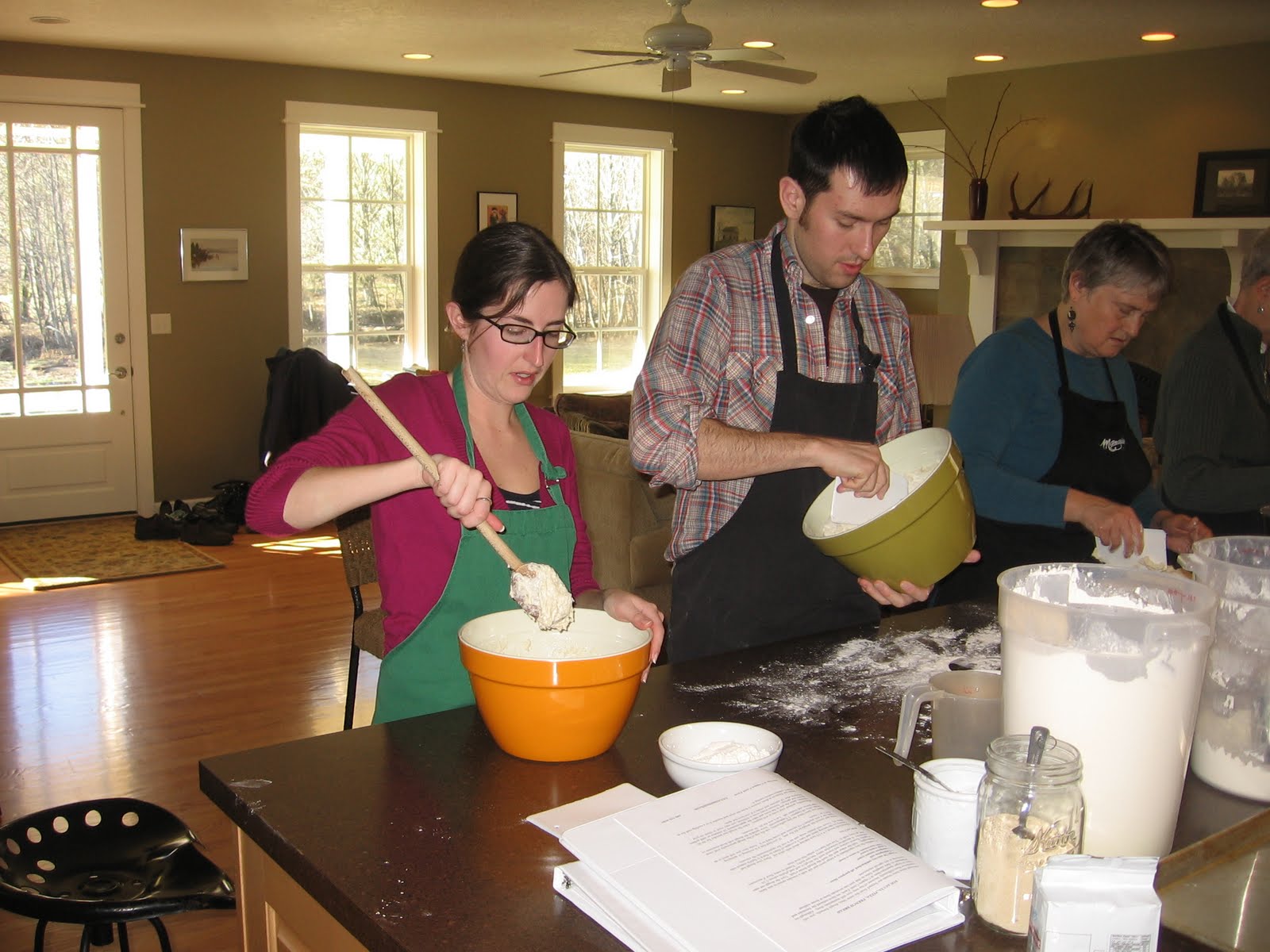
artisan bread baking students

Artisan Bread Baking
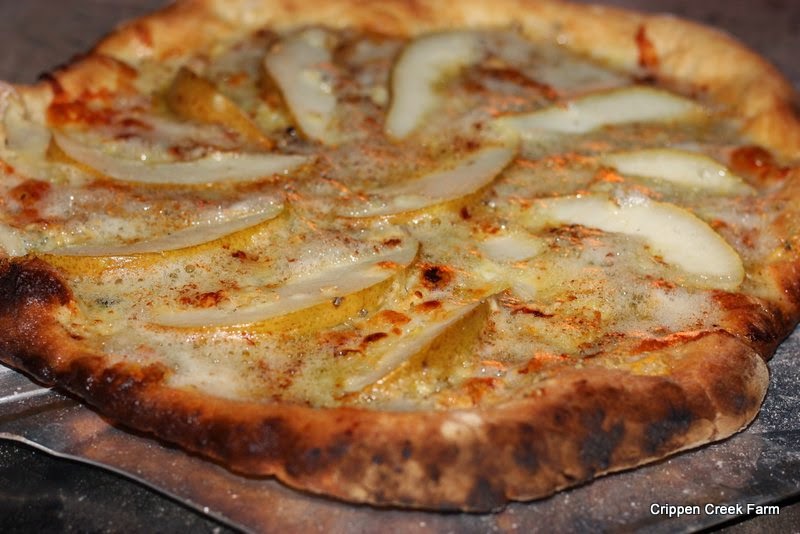
learn to make this Italian Country Loaf at home

Rustic Italian Bread

Italian Country Cooking Class students
students from Italian Country Cooking Class
enjoying the fruits of their labor

And finalmente....

A Perfect Tiramisu
A Perfect Tiramisu


Now what about you? Do you have a version of this classic dish in your family? Or were you lucky enough to have an Italian friend that invited you to Sunday dinner? How about sharing your own ethnic family traditions with our readers? Are there some cooking class themes you would like for us to offer?

We will continue to highlight Italian-American cuisine in future posts but in the meantime you might want to visit
Italyville and Proud Italian Cook. I love these blogs.

Buon appetito!

Tuesday, February 17, 2009

From Our Kitchen

Now that we have managed to get through most of the winter storm clean up, I hope to get back to writing about more enjoyable things such as food. So let's catch up on what we have been cooking and serving at the inn lately.

CRISP ROSEMARY FLAT BREAD
Gourmet, July 2008


This is really more of a cracker than a bread. It's a great alternative to bread and far better than any crackers you can buy in a store. What's more it's really simple to prepare.

8 3/4 oz of flour
1 Tablespoon of chopped fresh rosemary (plus 2 sprigs)
1 teaspoon of baking powder
3/4 teaspoons of kosher salt
1/2 cup of water
1/3 cup of extra virgin olive oil (plus more for brushing on)
Coarse sea salt or kosher salt

Preheat oven to 450 degrees.

Stir together flour, chopped rosemary, baking powder and salt in a medium bowl. Make a well in the center and pour in the water and olive oil. Gradually stir into the flour with a wooden spoon until a dough forms. Turn dough out on to a floured work surface and knead gently 4 or 5 times.

Divide the dough into 3 pieces and roll out 1 piece into a 10 inch round. The shape should be rustic and the dough should be thin.

Place the dough on a baking sheet lined with parchment. Lightly brush the top with additional olive oil and scatter small clusters of rosemary leaves on top, pressing them into the dough. Sprinkle with sea salt or kosher salt. Bake until golden and browned in spots, for 8-10 minutes. Cool slightly on a wire rack and break into pieces to serve.


From that same issue of Gourmet comes this great accompaniment.
GOAT CHEESE WITH OLIVES, LEMON AND THYME


1/2 cup of assorted olives
3 sprigs of fresh thyme
3 Tablespoons extra virgin olive oil
1/2 teaspoon grated lemon zest
4-5 oz medallion of fresh goat cheese

heat olives, thyme, oil, lemon zest and pepper in s small saucepan over low heat just until fragrant. cool to room temperature, pour over the goat cheese and serve with crisp rosemary bread.

One of my favorite dishes to serve in the winter is osso buco. The classic preparation of this dish calls for veal shanks slowly braised with vegetables, wine and broth. Given the high cost of veal these days and the difficulty in finding humanely raised veal, we decided to substitute one of our pasture raised chickens. Since our chickens have firmer muscle and a little more chew than a supermarket chicken, they are a perfect candidate for the slow braising process, and the flavors married beautifully. The meat just falls off the bone.


CHICKEN OSSO BUCO


1 cup finely chopped yellow onion
2/3/cup finely chopped carrot
2/3 cup finely chopped celery
¼ cup butter
1 teaspoons finely chopped garlic
2 strips lemon peel
½ cup olive oil
8 chicken thighs (preferably with bone in)
1 cup all-purpose flour
1 cup dry white wine
2 cups chicken broth
1 ½ cups canned tomatoes coarsely chopped, with their juice
¼ teaspoon dried thyme
½ teaspoon dried basil
2 bay leaves
Salt and pepper

1. Preheat the oven to 350 degrees
2. Saute the onion, carrot and celery in the butter and 1 tablespoon of olive oil
About 8-10 minutes…until soft. Remove them from the pan and set aside in a bowl.
3. Dredge the chicken in the flour with salt and pepper. Heat the remaining oil in the pan and when it is quite hot, brown the chicken pieces in the oil on both sides.
4. When all the chicken is brown, remove them from the pan and drain off most of the fat. Add the wine and boil briskly for 3 minutes scraping up any browned bits from the bottom of the pan.
5. Return the vegetables to the pan and set the chicken pieces on top, add the broth, tomatoes and spices and lemon peel. If you are using canned broth, hold off on the salt until after cooking. The liquid should come up to the top of the chicken. Add more broth if necessary.
6. Bring the contents of the casserole to a simmer on the stove top. Cover tightly and place in the lower third of the preheated oven. Cook for about 2 hours, carefully turning and basting the chicken pieces every 20 minutes. When done, they should be very tender when pricked with a fork, and the sauce should be dense and creamy. If the sauce seems to thin when the chicken is done, remove the chicken to a warm platter, place the uncovered casserole on top of the stove, and over high heat briskly boil the sauce until it thickens. Pour the sauce over the veal and serve piping hot.


Risotto Milanese would be a good choice to serve with this as is a POLENTA WITH BUTTER AND CHEESE, which is what we chose to do.


2 cups coarse-grained cornmeal
1 tablespoon salt
¼ lb. butter
8 Tablespoons grated Parmesan cheese

Bring 7 cups of water to a boil in a large heavy pot.
Add the salt and turn the heat down to medium low so that the water is just simmering, and add the cornmeal in a very thin stream, stirring with a wooden spoon. Keep the water at a slow, steady simmer while stirring.

Continue stirring for 20 minutes after all the cornmeal has been added. The polenta is done when it tears away from the sides of the pot as you stir. Remove from the heat and stir in the butter and cheese.

Adapted from THE CLASSIC ITALIAN COOKBOOK by Marcella Hazan


A new recipe from Bon Appetit was the perfect ending for this meal
COFFEE CARAMEL CREME BRULEE


2 cups heavy whipping cream, divided
1/4 cup dark-roast coffee beans (such as French roast; about 3/4 ounce), crushed with mallet in plastic bag
1 cup sugar, divided
1/2 cup water
2 cups half and half
8 large egg yolks
1/4 teaspoon salt


Bring 1 cup cream and coffee beans to simmer in heavy small saucepan. Remove from heat; cover and let steep at least 20 minutes and up to 1 hour.

Preheat oven to 325°F. Stir 2/3 cup sugar and 1/2 cup water in heavy medium saucepan over low heat until sugar dissolves. Increase heat to medium-high and bring to boil, brushing down sides of pan with wet pastry brush. Boil without stirring until syrup is deep amber, swirling pan occasionally, about 11 minutes. Remove pan from heat. Add remaining 1 cup whipping cream (mixture will bubble up). Stir over low heat until caramel is smooth. Stir in half and half. Strain coffee-infused cream into caramel cream; discard coffee beans in strainer.

Whisk yolks, salt, and remaining 1/3 cup sugar in large bowl to blend. Gradually whisk in cream mixture. Strain custard into large measuring cup.

Arrange eight 2/3- to 3/4-cup ramekins or custard cups in roasting pan. Divide custard among ramekins. Add enough warm water to roasting pan to come halfway up sides of ramekins or custard cups.

Bake custards until just set in center, 30-40 minutes. Transfer custards from water bath directly to refrigerator. Chill uncovered until cold, at least 3 hours and up to 1 day.

Usually I caramelize the top by sprinkling sugar on them and heating them with a blow torch or under the broiler of the oven. I used a different technique that I have come to prefer.

Stir 1/2 cup of sugar together with 3 tablespoons of water. Heat and stir until the sugar is dissolved and the syrup comes to a boil. Stop stirring and allow it to boil until it turns a deep amber color. Remove from the heat pour about 1/2 tablespoon on to each custard. It will turn into a shiny glass-like caramel.

Monday, February 9, 2009

This Month At Redmen Hall


Redmen Hall

What started out as a small schoolhouse in 1894 has become a museum highlighting the history of Skamokawa and also features a fabulous Lewis and Clarke display.
On display this month at Redmen Hall are the works of several very talented local artists.


Ruth Doumit with her mosaics and stained glass


Mike Rees and Mike Swift

Mike Rees has an amazing display of black and white photography from all over the world and Mike Swift is displaying his beautiful landscape paintings and vintage cars.

The exhibit also includes work by photogaraphers David Vik and Ruby Murray.

Redmen Hall is open Thursday-Sunday from Noon to 4. If you happen to be staying with us on a different day than that, Kitty can probably get you in since she is a docent there.

About Me

My Photo
Don and Kitty Speranza
I grew up in Rochester, NY, a community with a rich Italian-American heritage. Migrating west, I settled in Portland, OR, where my wife and I raised four wonderful children and I enjoyed a 27 year career in law enforcement. Now my wife and I enjoy hosting people in our country bed and breakfast, baking bread for our farm market, teaching cooking classes and raising our own food in a sustainable manner.
View my complete profile